Showing posts with label Training. Show all posts

Wednesday, September 24, 2014

Children can be trained to recognise emotions

Children can using training to spot crucial cues on someone's emotional state, new research from the University of Lincoln, UK, has show.

Children can learn to better recognise other people's emotions through games which emphasise the significance of the eyes and the mouth in conveying feelings, new research has shown.

The study by cognitive neuroscientists at the University of Lincoln, UK, suggests that simple training programmes could help children better understand which expressive facial features offer the most important cues to other people's emotional state.

It is hoped the findings, published in the peer reviewed science journal PLOS ONE, could lead to new or improved interventions for children and adults who have difficulty recognising emotional states in others.

Dr Petra Pollux, a cognitive neuroscientist from the University of Lincoln's School of Psychology, said: "How we recognise and process facial expressions plays a big part in our social interaction skills."

"We've all experienced walking into a room, looking around and immediately understanding that something has happened, and that's because we're reading the expressions on people's faces."

"This ability to understand and read facial expressions is a crucial skill in development and begins at quite an early age."

"Generally, when we look at faces, we look at the eyes and the mouth, but with a definite bias towards the eyes."

"We wanted to investigate if there was a correlation between which parts of the face the children looked at and their ability to correctly pick up on the emotional state of the person in the image."

During the study nine-year-old children were shown images which conveyed varying levels of intensity of emotional expressions, from a small smile to a big grin, and asked to match it with the correct emotion. If they answered incorrectly, they were alerted by a tone.

Children and adults were not given any instructions about eye-movements, but over the four sessions learned that focusing more on the eyes offered the crucial clues they needed.

The images used in the study were digitally manipulated and showed happy, sad or fearful expressions.

An adult's ability to recognise emotions was also assessed and compared with children's, and in both cases, special eye tracking equipment was used to monitor their gaze pattern and determine which features of the face, such as the eyes, nose or mouth, they focused on most.

Children looked less often and for a shorter duration at the eyes, and more often and for longer at the mouth compared with adults.

Training for both adults and children increased the amount of time spent looking at the eyes, although for adults this was only for faces which showed a sad expression.

Children, however, showed a significant increase in the amount of time spent focused on the eyes of all three expressions after training, leading to more correct answers.

The images used in the final session were also replaced by new faces, meaning their abilities translated to different people, researchers said.

Dr Pollux added: "It's really useful to know that the way a child scans a face plays an important role in recognising emotions. This research could be used to develop mobile phone apps which turn this kind of training into a game."

Researches now hope that the findings will inform training programmes for people in need of a better understanding of recognising facial expressions, such as those with autism or other cognitive development problems.

More information: Pollux PML, Hall S, Guo K (2014) "Facial Expression Training Optimised Viewing Strategy in Children and Adults." PLOS ONE 9(8): e105418. DOI: 10.1371/journal.pone.0105418

Thursday, September 26, 2013

Leadership and energy: 5 Stages of Baby, Canine Friendship - Part 1

You spent the last nine months preparing your dog for this new family member, and the introduction and initial meeting went well but that’s just the beginning!

Your dog’s relationship with your baby will change over time. At each stage of your baby’s development, you’ll encounter new joys and new challenges.

The key is to be alert to changes and to monitor interactions between them so you can step in and correct problem behaviour — from either your dog or your baby!

Here are a few of the dynamics you may encounter as your baby grows — and how to get through them as a pack.

Stage 1: Newborn and the Baby Alarm
A newborn brings a whole range of new smells and sounds into your home, and perhaps the most worrying is crying.

Remember, your dog picks up on energy, and the energy that your baby is giving off while crying is anything but calm and assertive. Your dog may become distressed, too, whimpering, whining, and barking.

This may be endearing at times (“Aww, look — Spot is worried about you, too!”), but it can also be a problem.

A barking dog can get in the way when you’re trying to get a baby to sleep, and often those crying jags happen in the middle of the night, when your neighbors may not appreciate the commotion.

You can help accustom your canine (and human!) family members to the sounds of crying before the new arrival by playing the sound on your computer at loud volumes for extended periods of time.

If possible, keep your dog some place where the noises of the baby can’t reach him at night. (That way, at least someone is the house is getting a good night’s sleep!)

NB: If you have issues with your newborn baby sleeping go to www.dream-angus.com for solutions and counselling.

One of the most important things you can do during this stage is maintain a regular routine of walks with the whole pack — mom and baby out the door first and at the front of the pack.

This not only helps send a message about your baby’s role as a pack leader, but also helps drain your dog’s energy, leading to better behavior overall.

With all the changes of having a new baby, many new parents put dog walks on the back burner, resorting to just letting the dog out in the backyard or a quick stop to the corner.

Of course, you may have days where this is simply a necessity, but make that the exception to the rule. Consider dog walks a priority. It’s not just good for your dog; it’s good for you, too.

Tuesday, April 30, 2013

Koegel Researchers Claim to have successfully treat Autism in infants

Most infants respond to a game of peek-a-boo with smiles at the very least, and, for those who find the activity particularly entertaining, gales of laughter.

For infants with autism spectrum disorders (ASD), however, the game can be distressing rather than pleasant, and they'll do their best to tune out all aspects of it—and that includes the people playing with them.

That disengagement is a hallmark of ASD, and one of the characteristics that amplifies the disorder as infants develop into children and then adults.

A study conducted by researchers at the Koegel Autism Center at UC Santa Barbara has found that replacing such games in favour of those the infant prefers can actually lessen the severity of the infants' ASD symptoms, and, perhaps, alleviate the condition altogether.

Their work is highlighted the current issue of the Journal of Positive Behavioral Interventions. Lynn Koegel, clinical director of the center and the study's lead author, described the game-playing protocol as a modified Pivotal Response Treatment (PVT).

Developed at UCSB, PRT is based on principles of positive motivation. The researchers identified the activities that seemed to be more enjoyable to the infants and taught the respective parents to focus on those rather than on the typical games they might otherwise choose.

"We had them play with their infants for short periods, and then give them some kind of social reward," Koegel said.

"Over time, we conditioned the infants to enjoy all the activities that were presented by pairing the less desired activities with the highly desired ones."

The social reward is preferable to, say, a toy, Koegel noted, because it maintains the ever-crucial personal interaction.

"The idea is to get them more interested in people," she continued, "to focus on their socialisation. If they're avoiding people and avoiding interacting, that creates a whole host of other issues.

They don't form friendships, and then they don't get the social feedback that comes from interacting with friends."

According to Koegel, by the end of the relatively short one- to three-month intervention period, which included teaching the parents how to implement the procedures, all the infants in the study had normal reactions to stimuli.

"Two of the three have no disabilities at all, and the third is very social," she said. "The third does have a language delay, but that's more manageable than some of the other issues."

On a large scale, Koegel hopes to establish some benchmark for identifying social deficits in infants so parents and health care providers can intervene sooner rather than later.

"We have a grant from the Autism Science Foundation to look at lots of babies and try to really figure out which signs are red flags, and which aren't," she said.

"A number of the infants who show signs of autism will turn out to be perfectly fine; but we're saying, let's not take the risk if we can put an intervention in play that really works. Then we don't have to worry about whether or not these kids would develop the full-blown symptoms of autism."

Historically, ASD is diagnosed in children 18 months or older, and treatment generally begins around 4 years. "You can pretty reliably diagnose kids at 18 months, especially the more severe cases," said Koegel.

"The mild cases might be a little harder, especially if the child has some verbal communication. There are a few measures –– like the ones we used in our study –– that can diagnose kids pre-language, even as young as six months.

But ours was the first that worked with children under 12 months and found an effective intervention." Given the increasing number of children being diagnosed with ASD, Koegel's findings could be life altering.

"When you consider that the recommended intervention for preschoolers with autism is 30 to 40 hours per week of one-on-one therapy, this is a fairly easy fix," she said.

"We did a single one-hour session per week for four to 12 weeks until the symptoms improved, and some of these infants were only a few months old. We saw a lot of positive change."

FOOTNOTE
We present this article for you to read and be informed about. We do not in any way endorse this organisation or the work it does. Make up your own mind as to how relevant and scientific it is and make your own decisions.

Wednesday, July 4, 2012

Dyslexia: Links to Support Videos and Information

Here is a collection of additional dyslexia resources for parents AND the teachers who wish to genuinely help their struggling learners with dyslexia.

If just one teacher takes a look at what is offered here, it could translate into at least one step forward for one child.

Let’s hope that more teachers and their schools become both interested and motivated to do something to support these children.

Genius Within - Innovative online training for adults that will transform your dyslexia and bring out your inner genius. FREE informative videos & an online Dyslexia Profile Test are included here.
 
Dyslexia: Types of Dyslexia - Video by expert Dr. Diane Sawyer who provides basic information about dyslexia, including the 4 different types of the condition

Teaching Children with Dyslexia - What Accommodations Should My Child Have at School? A GOOD list of classroom accommodations specifically for dyslexia

‘I AM DYSLEXIC’: A Short Documentary - Video with various individuals (of different ages) who have dyslexia.

Decoding dyslexia (short animation clips) - Several segments from a 3-D animation of a TVNZ documentary entitled “Decoding Dyslexia

Spelling Technique for Dyslexic - Video (parent) presentation of special technique based on the phonics of “i-g-h” to help those with dyslexia to spell with success

For more information:
www.FocusandRead.com Tools for struggling readers of all ages!

Sunday, June 10, 2012

Catholic NGO brings education to places that roads can't reach - YouTube


"Bringing education to where the asphalt ends" is the motto of 'Faith and Joy', an educational movement that since 1955 has provided training to adults who for one reason or another weren't able to complete their education.

Saturday, March 3, 2012

Postgraduate Certificate in Dyslexia and Literacy | Dyslexia Action

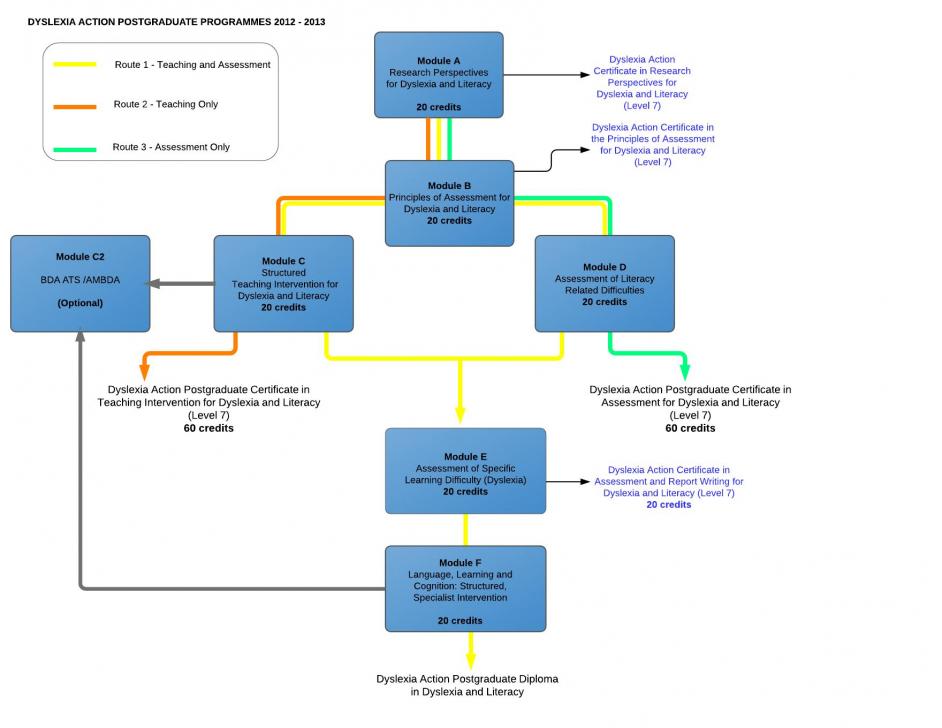
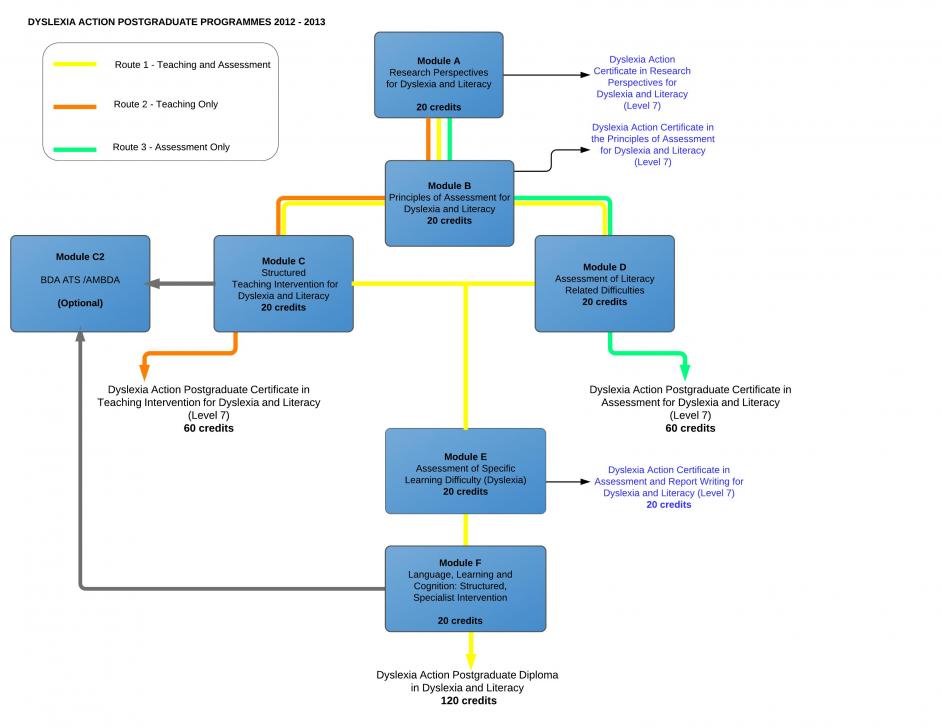
The Postgraduate Certificate in Dyslexia and Literacy programme from Dyslexia Action, is a unique online qualification designed for teachers and support teachers who wish to train as specialists in Dyslexia and Literacy.

Please read the Course Brochure before contacting us with any queries. See the link at the bottom of this page

The aim of the online Postgraduate programme is to train teachers to be informed, skilled practitioners who understand the theory and practice of teaching and assessment of learners with dyslexia of all ages. The programme offers a flexible approach to postgraduate study with personalised tutor support.

The Dyslexia Action Postgraduate Certificate in Dyslexia and Literacy programme is appropriate for a wide range of professional teachers and specialists including:
  • Teachers at all Key Stages
  • Special Needs Teachers
  • Special Educational Needs Coordinators (SENCOs)
  • Teachers and Support Teachers in Further and Higher Education and other Adult Settings
  • Teachers and Education Specialists based overseas
  • Educational Psychologists
  • Speech and Language Therapists and Occupational Therapists

Entry requirements

  • Bachelor of Arts, Bachelor of Science or Bachelor of Education honours degree
  • Recent and relevant experience in a Dyslexia Support setting
  • Qualified Teacher Status (QTS or QTLS) plus a minimum of one year's teaching experience (full time equivalent) is required for the teaching route (Modules C and C2 combined)
  • Excellent spoken and written English
  • IELTS 7 for applicants with English as a Second Language

    For further information see the IELTS website www.ielts.org
The first module of the three module course starts on Thursday, 5 April.
See the links for the Course Brochure, Fees, Dates and other useful information.
Quick Links
Personal Statement and Essay Information

Progression Flowchart

Information for your Head Teacher / Line Manager

Financial Terms and Conditions

Brochure; application/pdf iconCourse Brochure

Dyslexia Treatment Centre - Free Online testing

Click on the Image to go to the website.

A person with dyslexia can be helped with a tailor-made treatment programme once strengths and weaknesses of their learning ability has been identified with one of our specialist educational assessments.

The length of a dyslexia treatment depends on the level of severity of the student’s dyslexia. However, we have found it can take anywhere between 6 and 12 months, with fortnightly visits to the Dyslexia Treatment Centre.

Currently based in Glasgow and London.

Free Online Test and Parents and Teachers' E-Book

Thursday, December 22, 2011

NFB: Early Explorers

The National Federation of the Blind - Early Explorers Program - A Cane Travel Program for Blind and Low Vision Children Ages Infant to Seven

NFB Early Explorers is a free program designed to introduce young blind children and their families to the long white cane.

Providing children with an early start to independent movement and travel ensures that children will be more confident and curious travelers throughout life.

Possessing these skills allows young blind children to learn and play alongside their peers with ease.

Program participants will receive
• Travel Tales, a quarterly parent e-newsletter filled with ideas about how to foster age-appropriate movement in young children through the use of the long white cane
• An informational DVD
• A child-sized white cane
• A subscription to Future Reflections (a quarterly publication for parents and educators presenting articles on a variety of topics)
• Access to a network of resources devoted to serving parents of blind children

Mission of the NFB Early Explorers Program
• Introduce young children and their families to the long white cane
• Provide parents strategies to teach their children cane travel
• Make parents aware of essential resources for promoting success for their young blind children
• Help parents teach beginning cane travel skills
• Help parents instill in their child a love of traveling with a long white cane

Here’s How the Program Works…
1. Complete the Early Explorers Program Registration form online. For any question you may have, the contact information is listed at the bottom of this page.
2. Soon after you register, you will receive your child-sized long white cane and your packet of materials for the program.
3. Read the quarterly parent e-newsletter for tips and ideas for travel activities you can do with your child.
4. As often as possible encourage your child to take his cane with him everywhere he goes and have fun exploring and discovering exciting features of his environment with his favorite new tool, the long white cane.

The National Organization of Parents of Blind Children (NOPBC), a division of the National Federation of the Blind, is a great resource for parents of young blind children. Please visit the NOPBC main page for more great information.

The NFB Early Explorers Program is sponsored by the NFB Jernigan Institute and NOPBC.
If you have any comments, questions, or suggestions about the NFB Early Explorers Program, please contact:


Meleah Jensen
Earlyexplorers@nfb.org
200 East Wells Street
at Jernigan Place
Baltimore, MD 21230
(410) 659-9314, Extension 2418

Read More: NFB - Early Explorers

Saturday, March 5, 2011

Distance Learning: Play Therapy from Counsellor Training

For more information visit the Counsellor Training website; Play Therapy


NB: This is not a reccomendation to buy this product, it is suplied for information only. We encourage you to make your own checks and research on the provider before committing to the course.

Thursday, March 11, 2010

BRITE Initiative for Advice & Training on Inclusion Technologies in UK

BRITE (UK) provides information, advice and training on inclusive education, assessment and enabling technologies in Scotland.

The BRITE (UK) BLOG latest news - What's new on the BRITE Blog: Accessible learning resources; Sight Village VI tech exhibition;

Creating inclusive environments for Deaf Students and learners.

Access the latest news and views from the BRITE team any time from the menu bar on every page or click here to visit the Blog direct.

If you want more information on the Scottish Government's bill for Implementing Inclusion and Realising Potential in Learning click on this link.