This shocking video gives startling facts about the rapid deterioration of America because it is neglecting to educate its young people with even a basic education—much less world class. EDUCATION: What are the FACTS?
Saturday, March 3, 2012
US The Literate Nation Movie - YouTube
This shocking video gives startling facts about the rapid deterioration of America because it is neglecting to educate its young people with even a basic education—much less world class. EDUCATION: What are the FACTS?

With Dyslexia, Words Failed Me and Then Saved Me - Philip Schultz
Philip Schultz is a winner of the Pulitzer Prize for poetry and the author of the forthcoming memoir “My Dyslexia.”
 I was well into middle age when one of my children, then in the second grade, was found to be dyslexic. I had never known the name for it, but I recognized immediately that the symptoms were also mine. When I was his age I’d already all but given up on myself.
Repeating third grade at a new school, after having been asked to leave my old one for hitting kids who made fun of my perceived stupidity, I was placed in the “dummy class.” There were three of us, separated from our classmates at a table in the corner of the room.
One day, the teacher, who seldom spoke to us since it was understood that most of what she taught was beyond the reach of our intelligence, placed books in our hands and whispered that we should sit there quietly “pretending to read.” The principal was coming.
It was not the most outlandish thing she might’ve said, given how little was known about learning disabilities in the early 1950s, and how little training a teacher in the poorest section of Rochester would have received. And her request seemed reasonable to me.
I couldn’t tie my shoes, tell time or left from right, or recreate musical notes or words. I not only couldn’t read but often couldn’t hear or understand what was being said to me — by the time I’d processed the beginning of a sentence, the teacher was well on her way through a second or third.
When I did have something to say I couldn’t find the words with which to say it, or if I could, forgot how to pronounce them.
My situation then seemed hopeless; I had no idea what a learning disability was, or that it had nothing to do with intelligence. Being asked to pretend I wasn’t as stupid as I feared made perfect sense. Only in recollection does the pain of such a moment make itself felt.
Read more of this article here: With Dyslexia, Words Failed Me and Then Saved Me
The SAGE Handbook of DYSLEXIA

Description
The SAGE Handbook of Dyslexia is a comprehensive overview of a complex field. It is a rich, critical assessment of past and present theory and current research, which also looks to the future. The editors have brought together key figures from the international academic world - both researchers and practitioners - to examine the relationships between theoretical paradigms, research and practice, and to map new areas of research.
Good Writing Techniques Find a Perfect Platform in Thompsons New Book

But writing is so diverse that one should be careful not to present any detail erroneously or insufficiently. Good writing techniques have found a perfect place for everyone's access in between the covers of author Geneva Anderson Thompsons The Rite to Write Right about Wright.
This is an educational book that will walk readers through the fundamentals of writing providing a substantial amount of tips and techniques on how to develop their writing skill.
A good writer is highly prized; therefore, it is important to know what is good writing. This book clearly defines the essential elements of good writing.
Here, Thompson underscores how presentation, clarity and professionalism can affect the writer's brandits as if they were the work itself and how their work can influence the opportunities in this field.
The book plausibly presents the importance of writing and shares good writing techniques to supplement the readers knowledge and help boost their aptitude.
It discusses on the importance of a powerful title and how to make the introduction of one's piece, win the interest of the reader.
It underscores the key components of a compelling body, one that comprehensively binds almost all important information the readers surely are going to find.
Moreover, grammar, punctuations, transitional words and phrases, commonly used words, and additional expressions are also emphasized in this book to ensure compact and indispensable information are well supplemented.
Compelling, very informative, easy to understand and very feasible, The Rite to Write Right about Wright offers readers the road map to good writing. This book is the first step toward becoming a master of ones own craft, a practical way to learn a simple but prize-winning writing strategy.
For more information on this book, interested parties may log on to www.Xlibris.com.
About the Author
Geneva Anderson Thompson is originally from Jamaica, West Indies, where she taught students at High School and Community College, respectively. Currently, shes teaching at a middle school in South Florida. She has always had a passion for writing. Publishing this book has been her dream. Her philosophy in life is, Just Write.
The Rite to Write Right about Wright (Amazon.co.uk) * by Geneva Anderson Thompson
Good Writing Tips
Publication Date: January 17, 2012
Trade Paperback; $ 15.99; 48 pages; 978-1-4691-4291-3
Trade Hardback; $ 24.99; 48 pages; 978-1-4691-4292-0
eBook; $ 3.99; 978-1-4691-4293-7
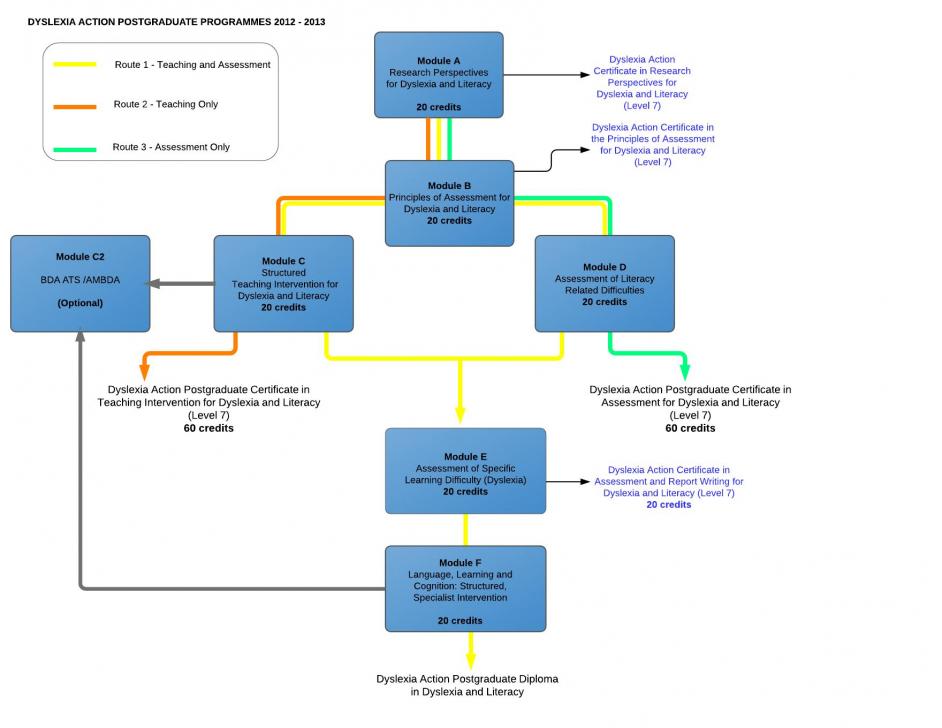
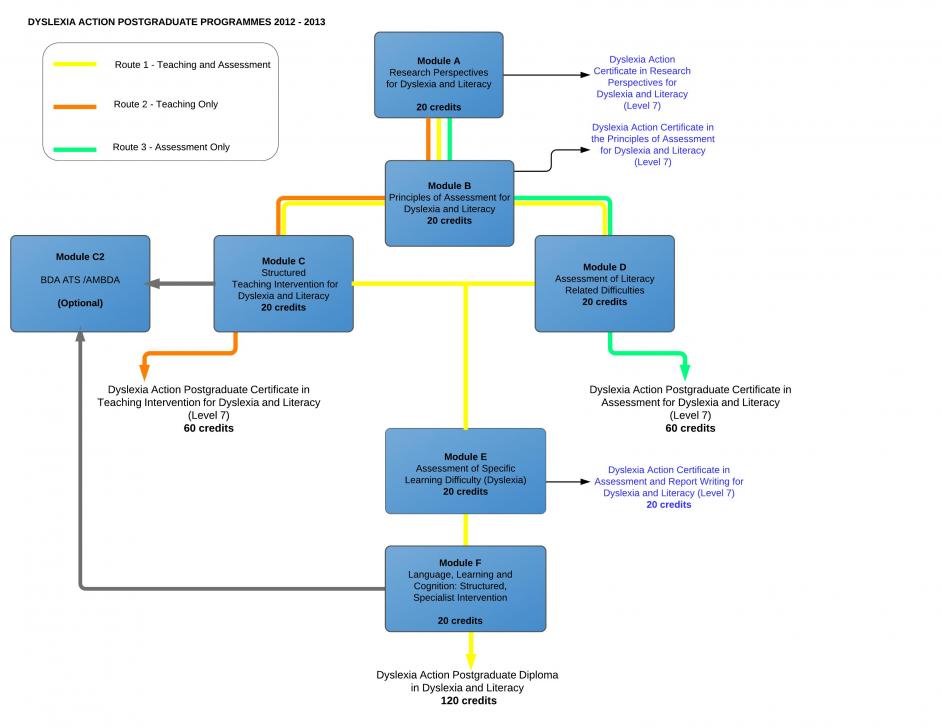
Postgraduate Certificate in Dyslexia and Literacy | Dyslexia Action

Please read the Course Brochure before contacting us with any queries. See the link at the bottom of this page
The aim of the online Postgraduate programme is to train teachers to be informed, skilled practitioners who understand the theory and practice of teaching and assessment of learners with dyslexia of all ages. The programme offers a flexible approach to postgraduate study with personalised tutor support.
The Dyslexia Action Postgraduate Certificate in Dyslexia and Literacy programme is appropriate for a wide range of professional teachers and specialists including:
- Teachers at all Key Stages
- Special Needs Teachers
- Special Educational Needs Coordinators (SENCOs)
- Teachers and Support Teachers in Further and Higher Education and other Adult Settings
- Teachers and Education Specialists based overseas
- Educational Psychologists
- Speech and Language Therapists and Occupational Therapists
Entry requirements
- Bachelor of Arts, Bachelor of Science or Bachelor of Education honours degree
- Recent and relevant experience in a Dyslexia Support setting
- Qualified Teacher Status (QTS or QTLS) plus a minimum of one year's teaching experience (full time equivalent) is required for the teaching route (Modules C and C2 combined)
- Excellent spoken and written English
- IELTS 7 for applicants with English as a Second Language
For further information see the IELTS website www.ielts.org
See the links for the Course Brochure, Fees, Dates and other useful information.
Quick Links
Personal Statement and Essay Information
Progression Flowchart
Information for your Head Teacher / Line Manager
Financial Terms and Conditions
Brochure;
 Course Brochure
Dyslexia Treatment Centre - Free Online testing

A person with dyslexia can be helped with a tailor-made treatment programme once strengths and weaknesses of their learning ability has been identified with one of our specialist educational assessments.
The length of a dyslexia treatment depends on the level of severity of the student’s dyslexia. However, we have found it can take anywhere between 6 and 12 months, with fortnightly visits to the Dyslexia Treatment Centre.
Currently based in Glasgow and London.
Free Online Test and Parents and Teachers' E-Book
Notes from a busy Mum
I've been looking at Inspiration software from S.A for mind mapping, strategies for studying and organizing time in "Study Skills" - See also Dyslexia Software
The Complete Guide to Smart Learning, the need to take charge of supporting your child through getting the basics (learning to read and write) and the need to constantly remind teachers that your child is dyslexic, especially when exams and internal assessments loom.
We also discussed Dragon software which my son is using and loving - allowing him to dictate stories and then print them out!!! He loves it that his stories are now displayed like everyone elses.
We discussed the sometimes defensive attitude taken by schools and hoped we could in some way overcome that, although we weren't sure how to. We discussed the fact that any communications to school should be cc'd to all relevant players.
The Complete Guide to Smart Learning, the need to take charge of supporting your child through getting the basics (learning to read and write) and the need to constantly remind teachers that your child is dyslexic, especially when exams and internal assessments loom.
We also discussed Dragon software which my son is using and loving - allowing him to dictate stories and then print them out!!! He loves it that his stories are now displayed like everyone elses.
We discussed the sometimes defensive attitude taken by schools and hoped we could in some way overcome that, although we weren't sure how to. We discussed the fact that any communications to school should be cc'd to all relevant players.
Friday, March 2, 2012
Chronic Fatigue Syndrome: Online Therapy More Effective for Teens
Online therapy is more effective for exhausted teens with chronic fatigue syndrome than traditional in-person therapy, according to new research.
Exhausted teens fared better with behavioral therapists over webcams who gave addition support through email, compared with teens treated with exercise and in-person therapy sessions, according to the research.
Online-treated teens reported higher school attendance, more energy and better overall health, compared with their in-person treated peers, according to the study.
Researchers from the Utrecht University Medical Center in The Netherlands followed 135 teens over the course of a year. Half of the participants received standard treatments of exercise and one-on-one therapy sessions with a behavioral therapist, and the other half received online therapy through a program called FITNET - Fatigue In Teenagers on the interNET - created by the researchers.
"Web-based treatment has general advantages: it is available at any time, avoids face-to-face treatment barriers (i.e., treatment delay due to poor accessibility, inconvenience of scheduling appointments, missing school or work, travelling to or from a clinician's office), and reduces treatment time and costs," the authors wrote.
Chronic fatigue syndrome, also known as myalgic encephalomyelitis, is a condition characterized by fatigue, impaired memory, muscle and joint pain, headaches, night sweats and psychological problems such as depression, anxiety and mood swings.
The disease can be debilitating and often causes missed work and school, according to the Centers for Disease Control and Prevention.
The cause of the disorder is not known and usually starts suddenly with flu-like symptoms.
After six months of therapy, 85 percent of the FITNET group reported no severe fatigue compared to only 27 percent from the standard treatment group, according to the study.
In addition, 75 percent of the FITNET group stayed enrolled in school full time compared to 16 percent from the standard treatment group.
The trend remained after a year of therapy.
"What is exciting about this trial is that these researchers have made the delivery of an effective treatment for CFS more convenient, more accessible, and possibly more cost-effective," Dr. Peter White, a chronic fatigue syndrome researcher at the London School of Medicine and Dentistry, who was not involved with the study, told WebMD.
White said many people suffering from chronic fatigue syndrome have a hard time finding treatment due to a lack of qualified therapists.
"FITNET offers a readily accessible and highly effective treatment for adolescents with chronic fatigue syndrome," the authors wrote. "The results of this study justify implementation on a broader scale."
No word on when chronic fatigue syndrome patients will be able to use FITNET themselves.
The Lancet published the study Thursday.
Some chronic fatigue syndrome researchers are skeptical of the results.
"I find it hard to believe that an Internet-delivered cognitive behaviour therapy (CBT) programme can produce a 63 percent recovery rate over a six month period" Dr. Charles Shepherd, a medical advisor for the Myalgic Encephalomyelitis Association, a group that funds research for the condition, said in a statement.
"The success rate is far in excess of any other published clinical trial," he continued. He also said that the results are not consistent with chronic fatigue syndrome studies that had a larger sample size.
Chronic fatigue syndrome affects over 1 million Americans, according to the CDC. Missed work and school days, doctor visits and other healthcare costs related to the condition total $9.1 billion annually, according to a 2004 Neuropsychology Review study.
Exhausted teens fared better with behavioral therapists over webcams who gave addition support through email, compared with teens treated with exercise and in-person therapy sessions, according to the research.
Online-treated teens reported higher school attendance, more energy and better overall health, compared with their in-person treated peers, according to the study.
Researchers from the Utrecht University Medical Center in The Netherlands followed 135 teens over the course of a year. Half of the participants received standard treatments of exercise and one-on-one therapy sessions with a behavioral therapist, and the other half received online therapy through a program called FITNET - Fatigue In Teenagers on the interNET - created by the researchers.
"Web-based treatment has general advantages: it is available at any time, avoids face-to-face treatment barriers (i.e., treatment delay due to poor accessibility, inconvenience of scheduling appointments, missing school or work, travelling to or from a clinician's office), and reduces treatment time and costs," the authors wrote.
Chronic fatigue syndrome, also known as myalgic encephalomyelitis, is a condition characterized by fatigue, impaired memory, muscle and joint pain, headaches, night sweats and psychological problems such as depression, anxiety and mood swings.
The disease can be debilitating and often causes missed work and school, according to the Centers for Disease Control and Prevention.
The cause of the disorder is not known and usually starts suddenly with flu-like symptoms.
After six months of therapy, 85 percent of the FITNET group reported no severe fatigue compared to only 27 percent from the standard treatment group, according to the study.
In addition, 75 percent of the FITNET group stayed enrolled in school full time compared to 16 percent from the standard treatment group.
The trend remained after a year of therapy.
"What is exciting about this trial is that these researchers have made the delivery of an effective treatment for CFS more convenient, more accessible, and possibly more cost-effective," Dr. Peter White, a chronic fatigue syndrome researcher at the London School of Medicine and Dentistry, who was not involved with the study, told WebMD.
White said many people suffering from chronic fatigue syndrome have a hard time finding treatment due to a lack of qualified therapists.
"FITNET offers a readily accessible and highly effective treatment for adolescents with chronic fatigue syndrome," the authors wrote. "The results of this study justify implementation on a broader scale."
No word on when chronic fatigue syndrome patients will be able to use FITNET themselves.
The Lancet published the study Thursday.
Some chronic fatigue syndrome researchers are skeptical of the results.
"I find it hard to believe that an Internet-delivered cognitive behaviour therapy (CBT) programme can produce a 63 percent recovery rate over a six month period" Dr. Charles Shepherd, a medical advisor for the Myalgic Encephalomyelitis Association, a group that funds research for the condition, said in a statement.
"The success rate is far in excess of any other published clinical trial," he continued. He also said that the results are not consistent with chronic fatigue syndrome studies that had a larger sample size.
Chronic fatigue syndrome affects over 1 million Americans, according to the CDC. Missed work and school days, doctor visits and other healthcare costs related to the condition total $9.1 billion annually, according to a 2004 Neuropsychology Review study.
Kids Learn to Flex Their Cultural Muscles
Preschool kids angling for a reward display social skills that may, on a grander scale, turn human cultures into cauldrons of change and innovation.
Groups of 3- to 4-year-olds, but not clusters of chimpanzees or capuchin monkeys, solved progressively more complex tasks in a puzzle box by employing three key social strategies, say zoologist Rachel Kendal of Durham University in England and her colleagues.
First, children who solved a task taught struggling peers what to do. Second, kids often copied what others did. And finally, task solvers frequently shared stickers they received as rewards with kids who hadn’t yet earned stickers.
This package of social behaviours characterized four- or five-person groups in which at least two kids solved a three-stage puzzle and most of the rest reached stage two, Kendal’s team reports in the March 2 Science.
Chimps and capuchins in groups of eight to 32 rarely got beyond stage one of the same puzzle, the researchers say. No evidence of teaching or sharing of food rewards appeared in these primates. Chimps copied others at the first stage but not at higher stages.
“The stark contrast in skills supporting cultural ability between children and both chimps and capuchins was surprising,” Kendal says. Her study is the first to use the same task to explore social learning in different species.
Previous studies of children’s problem-solving in groups have similarly focused on teaching, imitation and sharing, remarks anthropologist Joseph Henrich of the University of British Columbia in Vancouver.
These behaviors critically enable human cultures to make rapid advances in knowledge and technology, he says. Further research needs to untangle precisely how this process works, Henrich adds.

Children’s puzzle-box successes may reflect other human mental specialties, such as reasoning with language and inferring others’ intentions, suggest psychologist Robert Kurzban of the University of Pennsylvania in Philadelphia and anthropologist H. Clark Barrett of the University of California, Los Angeles, in a commentary published in the same issue of Science.
In Kendal’s study, participants reached chutes containing stickers or food first by moving a sliding door to the left or right, then by pushing either of two buttons to move the door further in the same direction, and finally by turning a dial using one of two colored holes, releasing the door to slide still further.
After 30 hours, only one chimp mastered the puzzle box, but the strategies didn’t spread. After 53 hours, no capuchins cracked all three tasks, and only two solved two tasks.
After 2.5 hours, five of eight kids’ groups contained at least two individuals who had conquered the puzzle box, with most remaining kids in those groups solving two tasks.
Groups of 3- to 4-year-olds, but not clusters of chimpanzees or capuchin monkeys, solved progressively more complex tasks in a puzzle box by employing three key social strategies, say zoologist Rachel Kendal of Durham University in England and her colleagues.
First, children who solved a task taught struggling peers what to do. Second, kids often copied what others did. And finally, task solvers frequently shared stickers they received as rewards with kids who hadn’t yet earned stickers.
This package of social behaviours characterized four- or five-person groups in which at least two kids solved a three-stage puzzle and most of the rest reached stage two, Kendal’s team reports in the March 2 Science.
Chimps and capuchins in groups of eight to 32 rarely got beyond stage one of the same puzzle, the researchers say. No evidence of teaching or sharing of food rewards appeared in these primates. Chimps copied others at the first stage but not at higher stages.
“The stark contrast in skills supporting cultural ability between children and both chimps and capuchins was surprising,” Kendal says. Her study is the first to use the same task to explore social learning in different species.
Previous studies of children’s problem-solving in groups have similarly focused on teaching, imitation and sharing, remarks anthropologist Joseph Henrich of the University of British Columbia in Vancouver.
These behaviors critically enable human cultures to make rapid advances in knowledge and technology, he says. Further research needs to untangle precisely how this process works, Henrich adds.

Children’s puzzle-box successes may reflect other human mental specialties, such as reasoning with language and inferring others’ intentions, suggest psychologist Robert Kurzban of the University of Pennsylvania in Philadelphia and anthropologist H. Clark Barrett of the University of California, Los Angeles, in a commentary published in the same issue of Science.
In Kendal’s study, participants reached chutes containing stickers or food first by moving a sliding door to the left or right, then by pushing either of two buttons to move the door further in the same direction, and finally by turning a dial using one of two colored holes, releasing the door to slide still further.
After 30 hours, only one chimp mastered the puzzle box, but the strategies didn’t spread. After 53 hours, no capuchins cracked all three tasks, and only two solved two tasks.
After 2.5 hours, five of eight kids’ groups contained at least two individuals who had conquered the puzzle box, with most remaining kids in those groups solving two tasks.
Who's in the know? To a preschooler, the person doing the pointing
If you want a preschooler to get the point, point. That's a lesson that can be drawn from a new study in Psychological Science, a journal published by the Association for Psychological Science.
As part of their investigation of how small children know what other people know, the authors, Carolyn Palmquist and Vikram K. Jaswal of the University of Virginia, found they were able to mislead preschoolers with the simple introduction of a pointing gesture.
"Children were willing to attribute knowledge to a person solely based on the gesture they used to convey the information," says Palmquist. "They have built up such a strong belief in the knowledge that comes along with pointing that it trumps everything else, including what they see with their eyes."
The authors showed 48 preschoolers, half of them boys and half girls, a videotape of two women, four cups, and a ball.
In each of four sequences, one woman said she was going to hide the ball under one of the cups. The other woman covered her eyes and turned to the wall.
The "hider" placed a barrier in front of the cups, so the children could see she was hiding the ball, but not which cup she hid it under.
The barrier was removed, the other woman turned around. Then, each sequence took one of three forms. In the "baseline" condition, both women sat with their hands in their laps.
In another condition, each grasped a different cup, and in another, each pointed at a different cup. The children were asked: "Which woman knows where the ball is?" In two of the trials, one woman was the hider; in the other two, the other was.
When both grasped the cup or when neither touched a cup, the children gave the correct answer about three times out of four.
Grasping was not a meaningful gesture to the children, the authors guessed, or they may have associated grasping with searching for the ball.
When both women pointed, however, the children chose the right person only about half the time, statistically, by chance.
To make sure the preschoolers hadn't ignored the question and inferred they were being asked which cup they would look under, the experimenters showed eight other children the pointing sequences and asked: "Which woman hid the ball?"
In this case, the children got it right three out of four times. So the first group knew who hid the ball; they just thought the other woman must also have had some intelligence about the ball's whereabouts.
"From an early age, when children see pointing, they understand it as an important gesture used in contexts of teaching and learning," Palmquist explains.
"Generally people point because they have good reason to do it." As a species humans are "uniquely inclined toward cooperative communication," she notes.
"This finding fits into that framework. The children are already expecting that people will be helpful and knowledgeable, especially since they're using these cues."
As part of their investigation of how small children know what other people know, the authors, Carolyn Palmquist and Vikram K. Jaswal of the University of Virginia, found they were able to mislead preschoolers with the simple introduction of a pointing gesture.
"Children were willing to attribute knowledge to a person solely based on the gesture they used to convey the information," says Palmquist. "They have built up such a strong belief in the knowledge that comes along with pointing that it trumps everything else, including what they see with their eyes."
The authors showed 48 preschoolers, half of them boys and half girls, a videotape of two women, four cups, and a ball.
In each of four sequences, one woman said she was going to hide the ball under one of the cups. The other woman covered her eyes and turned to the wall.
The "hider" placed a barrier in front of the cups, so the children could see she was hiding the ball, but not which cup she hid it under.
The barrier was removed, the other woman turned around. Then, each sequence took one of three forms. In the "baseline" condition, both women sat with their hands in their laps.
In another condition, each grasped a different cup, and in another, each pointed at a different cup. The children were asked: "Which woman knows where the ball is?" In two of the trials, one woman was the hider; in the other two, the other was.
When both grasped the cup or when neither touched a cup, the children gave the correct answer about three times out of four.
Grasping was not a meaningful gesture to the children, the authors guessed, or they may have associated grasping with searching for the ball.
When both women pointed, however, the children chose the right person only about half the time, statistically, by chance.
To make sure the preschoolers hadn't ignored the question and inferred they were being asked which cup they would look under, the experimenters showed eight other children the pointing sequences and asked: "Which woman hid the ball?"
In this case, the children got it right three out of four times. So the first group knew who hid the ball; they just thought the other woman must also have had some intelligence about the ball's whereabouts.
"From an early age, when children see pointing, they understand it as an important gesture used in contexts of teaching and learning," Palmquist explains.
"Generally people point because they have good reason to do it." As a species humans are "uniquely inclined toward cooperative communication," she notes.
"This finding fits into that framework. The children are already expecting that people will be helpful and knowledgeable, especially since they're using these cues."
Subscribe to:
Posts (Atom)


 Posts
Posts