Showing posts with label touch. Show all posts

Thursday, December 20, 2012

The Power of a Mother's touch

Mothers who stroke their baby's body in the first few weeks after birth may change the effects that stress during pregnancy can have on an infant's early-life development, researchers have found.

Researchers at the Universities of Liverpool, Manchester, and Kings College, London have been studying whether stress in pregnancy can lead to emotional and behavioural problems in children for many years.

Attention is now moving towards how parents might alter these effects after birth.

Researchers are aiming to improve understanding of the issues to help enhance information services for pregnant women and their partners.

Scientists believe that stress in pregnancy can have an effect on an infant in later life by reducing the activity of genes that play a role in stress response.

Studies of early care-giving in rats have found that high levels of mothers' licking and grooming their pups soon after birth can increase the activity of these genes and may reverse the effects of prenatal stress on their offspring.

Some studies suggest that impacts of prenatal stress on an infant's development can be either positive or negative depending on the type of environment a child encounters. It is thought that some children may experience the effects through being more prone to high levels of fear or anger.

The team at Liverpool, Manchester and London followed first-time mothers from pregnancy through to the first years of their children's lives as part of Medical Research Council (MRC) funded research, The Wirral Child Health and Development Study.

It showed that links between symptoms of depression in pregnancy and subsequent infant emotions of fear and anger, as well as heart rate response to stress at seven months of age changed by how often a mother stroked their baby on the head, back, legs and arms in the early weeks of life.

The results suggest that stroking may alter gene activity in a similar way to that reported in animals.

Dr Helen Sharp, from the University of Liverpool's Institute of Psychology, Health and Society, explains: "We are currently following up on the Wirral children in our study to see if reports of early stroking by their mothers continue to make a difference to developmental outcomes over time.

"The eventual aim is to find out whether we should recommend that mothers who have been stressed during pregnancy should be encouraged to stroke their babies early in life"

The study is published in the journal PLOS ONE.

Wednesday, May 2, 2012

Hearing Disability Linked To Poor Touch Sensitivity

Touch and hearing are very distinct, but German scientists have found a possible genetic link between the two sensory systems.

Superficially, the two senses might seem worlds apart, but both rely on the ability to translate motions - vibrations in the ear and movement and pressure on the skin - into signals to the brain. A common set of molecules or mechanisms might be at work.

To determine if touch sensitivity can be inherited genetically, Henning Frenzel of the Max-Delbruck Center for Molecular Medicine and his colleagues first examined 100 pairs of fraternal and identical twins in a study outlined in the journal PLoS Biology.

They tested the twins on two kinds of touch sensitivity traits: "vibration detection threshold," or how low a vibration the subject could detect with their pinky finger; and "tactile acuity," or the ability to distinguish between two pressure points on the skin that are very close together.

Since the identical twins are genetically identical and the fraternal twins share up to 50 percent of the same genes, any genetic effect on touch should be more pronounced in the former.

Next, Frenzel and his team calculated the heritability of the two traits, a figure that explains the degree to which genetic variation contributed to the variation in the traits seen in the subjects. On average, 28 percent of the differences in tactile acuity and 52 percent of the differences in vibration detection could be chalked up to genetic influence.

Second Experiment
In a second experiment, the scientists found that some - but not all - of a population of young people that were born deaf also had impaired tactile acuity. But since there are about 70 known genes that are involved in hearing impairment, the researchers wanted to focus on a smaller group of genes to test the link between hearing and touch impairment.

Third Experiment - Usher syndrome
The scientists next examined patients with Usher syndrome - a hereditary condition that causes both hearing and visual impairment. They zeroed in on USH2A, one of the nine known genes that, when mutated, cause Usher syndrome.

Of the Usher patients studied, the 19 individuals that had a mutation in USH2A had both impaired hearing and poor touch sensitivity. It's possible then, that this gene may play a role in both touch and sound.

"Our next task will be to investigate some of these other cases to see if they are also correlated with problems in touch," senior author Gary Lewin said in a statement Tuesday. "This will give us a better understanding of the genetic mechanisms that underlie both types of perception."

Thursday, March 8, 2012

The Black Book of Colours - The Partly Sighted Companion

Today must be the day for tickling the outer limits of our senses. From the synesthetic explorations of sound through colour earlier today, we take the creative mind-bending a step further: Experiencing colour through the lack of colour.  

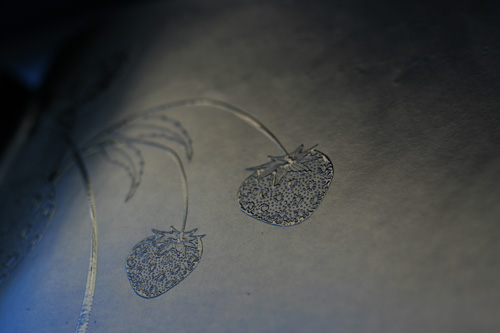
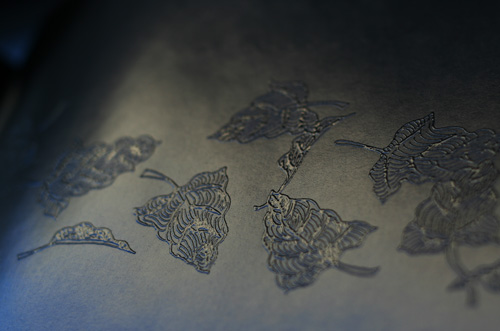
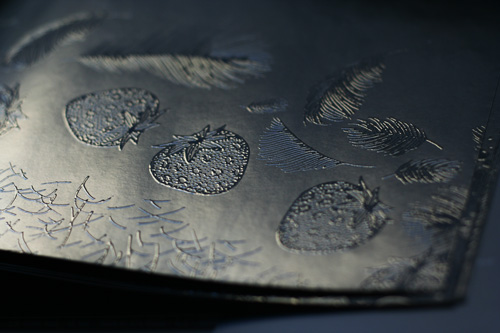
The Black Book of Colours, from author Menena Cottin and illustrator Rosana Faria, is a remarkable book of simple, elegant illustrations of natural objects, from strawberries to rain to bird feathers, depicted not through colour and shading but through embossed lines, inviting the viewer to experience them tactilely rather than visually.


The book is designed as an empathy tool that allows a sighted person to step inside the world of the blind, who experience the world through their fingers rather than their eyes.


Though intended for children, The Black Book of Colours is an absolute treat for adults, not merely as a feat of aesthetic elegance, but also as a beautiful philosophical metaphor for all those things in our lives that both are and aren’t, like the nature of reality or solitude or some great love we can touch with the tender tips of our fingers but never fully grasp.

Thursday, February 23, 2012

Dyslexia - TTRS Website: Touch-Type, Read and Spell


TTRS is a computer based course for children and adults who have spelling and reading difficulties, dyslexia and other learning differences.

Now in it's 20th year, TTRS has helped thousands of students to touch-type, read and spell and is used in hundreds of schools and institutions in Great Britain, Ireland, Australia and New Zealand and other parts of the world

Learning is promoted by a unique multi-sensory approach:

A systematic programme of seeing, listening, speaking and typing

  • Seeing the words written on the screen as they are typed out


  • Hearing the words pronounced as they are typed


  • Student and computer are interactive allowing for immediate self correction of errors and feedback of results


  • The structured ttrs course is finely graded in modules and levels building from words to sentences


  • With each successful module completed the student is encouraged to progress further


  • Students develop their own learning speed, therefore there are no peer group pressures


  • ttrs gives focus and support for a positive learning experience
  • Thursday, July 29, 2010

    Touch, Type, Read and Spell (TTRS)

    Touch, Type, Read and Spell (TTRS), is a multi-sensory computer based learning course for people with reading, writing and spelling difficulties, dyslexia or other learning differences.

    The program was developed in the United Kingdom in 1992 as a way to develop literacy skills, confidence, self-esteem and motivation in those struggling with their reading and writing skills.

    It is a language re-education program geared to dyslexic students and learners with specific learning disabilities or reading struggles.

    This means that you don't have to be dyslexic to benefit from this program. If dyslexia is not diagnosed early, the child gets grouped into a general 'learning difficulties' area where the child is not being properly assisted.

    Unfortunately some children are wrongly tagged as having an ADHD; the child can't focus or CAPD, which is a central auditory processing disorder; the child is not hearing things properly and therefore is not fully understanding what is intended.

    The most difficult challenge faced in helping families is that even when properly diagnosed, dyslexia can be a very difficult condition to work with and overcome.

    Dyslexia simply means having trouble with words. These words can be spoken, words written, words anything that has to do with language.

    The other issue you face is that no two dyslexics, just like no two people, are the same in how it manifests itself. Like all conditions, it can be anywhere from mild to severe.

    It is easy to package and dismiss the condition as a child who struggles to read, and then the teachers are left to help the child struggle through their issues.

    Unfortunately, it's not that simple dyslexia affects more than just their ability to hear a word, spell, read. Some students are very skilled in other areas e.g. maths, but when it comes to word issues, they have terrible issue.

    They get identified as having special needs and therefore they can access certain services through the school system, but although, throughout this process the child is 'supported' by the school system, it does not necessarily teach the child to read.

    Failing to teach a child to read is something that will rob individuals and the wider community, of a brilliant future.

    To be a successful, functioning adult in this modern world, the child has to be able to read. If you don't diagnose dyslexia for what it is, you deny that child the opportunity to learn to read and if you can teach a child to read, you have given them the world.

    As with the general population, Dyslexic children possess good intelligence, some are even above average intelligence but dyslexia can also bring other strengths. Some of those strengths are wonderful visual, spatial abilities, the ability to see or think outside the box.

    They can be very are artistic, creative, athletic, analytical. The bottom line is we have no idea the kind of world this will be in five, 10, 15, 20 years, but we are suppose to be educating our children for it.

    Now if we aren't accommodating the ones who are struggling, the very ones who have that ability to think outside the box, to come up with solutions, to see things in a different way, we are doing our world, our generation, our society, a disservice by pushing them aside and making them think that because they can't read well, they are stupid and not wanted on the voyage.

    Convincing a person with dyslexia that they aren't stupid is something that takes time because quite often they have been surrounded by frustration on many fronts but it is something that needs to be done.

    The TTRS program claims to do more than give individuals good keyboarding skills. Using the multi-sensory approach, TTRS is said to work because it makes things simple for the dyslexic learner. Anything that makes things simpler must be good, right.

    TTRS claim that your fingers are trained to go where the letters are. So as you think the words, the fingers automatically know where to go; they know how to spell the word; you remove that fear of spelling the word correctly and whether they can get their thoughts out.

    The argument goes, that if you train them to think, and type the way they think, they have more success in getting their thoughts on paper.

    User of this sytem claim that it is geared to the dyslexic learner, it lays everything out in a very specific order. So without them realising it, they are learning to read, and spell, while building their keyboard skills and their speed.

    Well, you need to try it for yourself. If it is so simple and it is such a great keyboarding program, then it should help children and students who struggle to read.

    Let me know how you find this system and I am always interested to hear your comments. For more information on TTRS, also visit www.ttrs.co.uk.

    Sunday, March 28, 2010

    Bamboo Fun a computer aid for Dyspraxia

    Bamboo Fun - Go to the site and run the video

    Overview
    Bamboo Fun combines the benefits of Multi-Touch with the comfort and precision of Wacom's ergonomically-designed pen. The result: a powerful new way to work with your computer.

    With Multi-Touch, you use simple hand gestures and finger taps on the tablet's surface. And because the active area is larger than traditional mobile devices and laptop trackpads, it's more comfortable and natural to use.

    Easily move around your desktop, scroll through documents, navigate the web, zoom in and out of photos, and rotate images.

    Need precision? Pick up the pressure-sensitive pen to edit photos, create personal greetings, make sketches, and mark up documents in your own handwriting.

    Using Bamboo is easy—even if you're new to the touch experience. The included tutorial will teach you how to use simple hand gestures to move around your desktop, make selections, and complete other tasks on your computer.

    You can even customise your Bamboo experience by assigning your own shortcuts to the four ExpressKeys™.

    Bamboo works with your existing computer: desktop or laptop, PC or Mac. And, the distributor claims that it's incredible value with the included software: Adobe® Photoshop® Elements and Nik® Color Efex Pro™.

    Sleek and black, the tablet makes for a stylish addition to your workspace but is not an ornament, it's supposed to be a tool.

    You can attach Bamboo to any PC, Laptop or Mac, via a standard USB port, set it comfortably by your keyboard, and let your intuition guide you.

    We are not endorsing this product and have no connection with the producer of it, it is simply here for information and for you to decide if it is useful to you or not.

    Wednesday, November 25, 2009

    Dyslexia - Multi-sensory Learning

    We are creatures of great sensitivity and have the ability to understand things from many perspectives. The most effective teaching method for children with learning differences is to engage a multisensory approach. Multisensory teaching strives to utilise all the child's senses, to relay information or convey meaning to the students.

    The teacher accesses the auditory, visual, and kinesthetic pathways to enhance memory and learning because they know that by using as many sensory paths as possible the more likely that the message will be understood and be absorbed.

    For example, when learning the vowel combination “oa” the student might first look at it and then have to trace the letters in the air while speaking out loud.

    This combination of listening, looking, and moving around creates a more lasting impression for the student. Relationships and connections between items and events, will become more memorable and concepts can be built up.

    Multisensory learning started back in the 1920s by Dr. Samuel Orton at the Mobile Mental Health Clinic in Iowa. Dr. Samuel Orton, one of the first to recognise, what we now call 'dyslexia' in students.

    He suggested that teaching the “fundamentals of phonic association with letter forms, both visually and kinesthetically presented and reproduced in writing, until the correct associations were built up,” would be the best learning approach for students of all ages.

    Dr. Orton had his patients trace, copy, and write letters whilst saying their corresponding sounds and associations. Today this method is known as multisensory learning.

    Children experiencing dyslexia often struggle with auditory and/or visual processing. They have trouble recalling words and how they are pronounced. This means that they do not comprehend the roles that sounds play in words.

    These children have difficulties rhyming words as well as blending sounds together to form words. Children who experience dyslexia, do not understand or acquire the alphabetic code. They are unable to grasp and retain the 'simple' repetative learning and memorising systems expected of them in the primary grades.

    If a child with dyslexia is given a task that uses just hearing and vision, without drawing upon other senses, the student will be at a disadvantage. When taught with a multisensory approach, children will learn alphabetic patterns and words by utilising all pathways – hearing (auditory), seeing (visual), touching (tactile) and moving (kinesthetic).

    Dyslexic students do not need more of the same instruction in class but a different type of instruction. They need to learn basic language sounds and the letters or letter combinations, that are used to make them. Becuase you are engaged in a building process, you need to starting from the very beginning and move forward in a gradual but logical, step by step process, which builds on the previous step.

    For this to be retained, the children need to be taught to do this by using their eyes, ears, voices, and hands. We are a sensitive multi-talented creature that enjoys stimulation, challenge and achievement. Children experiencing Dyslexia are no different from the rest of us. They need to be stimulated, challenged and be able to feel that other great sense, the sense of achievement. Something we all crave and enjoy when we succeed in learning a new skill.

    Conficious Proverb
    Tell me, and I will forget.
    Show me, and I may remember.
    Involve me, and I will understand.