
Thursday, August 23, 2012
School For Kids With ADHD, Dyslexia Boasts Record Enrollment

Saturday, April 21, 2012
Visual Spelling - Let Me Learn

All you need is some coloured paper, scissors, glue and your imagination. Split the words by sound chunks like ‘ch’ or ‘ea’ or like in ‘make‘ the a-e makes the long a-e sound.
Let children decide how they want to remember their words as this will help them remember better when they do the test in class.
Let Me Learn is a special educational needs shop providing fun dyslexia resources for teachers and parents.
Visual Spelling
Friday, September 30, 2011
UK Schools Rating System to be Cheapened
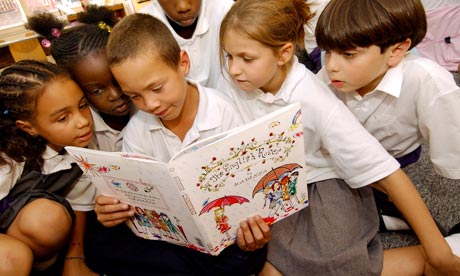
Fewer UK schools will be rated outstanding from next year, inspectors have said. The move comes after Michael Gove, the UK coalition education secretary, said many schools awarded the ranking did not deserve it.
Under rules coming into force in January, UK school inspectors will pay more attention to pupils' behaviour, the quality of teaching, and children's ability to read.
They will also spend more time scrutinising whether schools are narrowing the gap between disadvantaged pupils and their peers.
Miriam Rosen, Ofsted's chief inspector, said she expected it would become "more difficult to achieve the accolade of outstanding".
Education Audit: Ofsted's most recent annual report, published in November, showed that 13% of schools in England were rated as Outstanding, 43% were Good, 37% were Satisfactory and 8% were Inadequate.
Earlier this month Gove told a conference on UK school leadership that it was "a worry to me that so many UK schools are still judged as Outstanding overall when they have not achieved an Outstanding in their teaching and learning".
Inspectors give an overall rating to schools, but also give individual verdicts on teaching and learning. Ofsted figures show that of 3,577 schools judged outstanding overall at their latest inspection, 923 would have been ranked as good or very good at teaching.
The UK coalition government has instructed Ofsted to dramatically reduce the inspection categories to four: the achievement of pupils; the quality of teaching and learning; the effectiveness of the leadership and management; and standards of behaviour and safety..
Schools will no longer receive separate verdicts on whether they are doing their best to achieve community cohesion or safeguard their pupils.
Saturday, August 13, 2011
Dyscalculia = Maths oriented Dyslexia
Recallinga recent letter concerning a mother and her daughter, who is in college working on her associates degree. She was doing very well in all her classes, with one exception, maths, and then only within the criteria of timed tests.
She had been tested when she was much younger and been told that she had issues with stress or timed testing of maths. Her parents tried to explain the circumstances to the college. They asked if their daughter could be tested in a one to one learning centre with supervision, but without the stressful time limits. Unfortunately, the institution said no and were very unsympathetic to the parent's and their daughter's plight.
Sadly, we are told that the college personnel and teachers were very dismissive and acted as if the family were imagining the condition or simply making the whole thing up. We find this completely unacceptable in this modern world where inclusion, accessibility and usability is uppermost in all our minds. Educational institutes sole role is to enable learning and comprehension NOT to create difficulties by exclusion, squashing enthusiasm and promoting elitism.
For parents and students in a similar situation there is a supportive and helpful forum on the Dyscalculia website; The Dyscalculia Forum. There’s even a good chance a member is close where you live and maybe know a local place to get help.
If you’re in the US you can find local learning disability associations on the LDA USA website. They are a good source for local facilities, support and testing. It is important that you seek support from your community and not work too much in isolation, especially in raising awareness and in communicating your needs to the colleges and institutions.
Raising awareness for Dyscalculia is extremely important because it is still somewhat unrecognised all over the world. You will come across barriers to understanding but remember that Dyscalculia is medically approved in the scientific and educational world and falls into the same category as dyslexia, and has been for Decades.
Dyscalculia is clearly described, and accepted, in Both the DSM-IV and WHO ICD-10, which is the global medical registers used by doctors and mental health professionals to diagnose. It would be useful for you to seek this out and to get good copies made, to distribute to non-believers or misinformed educators. Thus, helping raise awareness and your cause through evidence-based research.
You will not only be helping your own or your family's situation you will be helping the many people who are excluded by the mere fact they have a Maths Dyscalculia.
Tuesday, June 1, 2010
Child Soldiers: Acceptance, social support, and educational access provide safety net
The Child Soldiers Global Report 20081 estimates that more than 300,000 children are engaged as soldiers around the globe, and more children are recruited every year in ongoing and new conflicts.
Although a number of multinational coalitions are aligned to stop the recruitment of child soldiers, some countries persist in not only the recruitment of children but also in exposing children to both the psychological and physical dangers associated with combat.
In the June issue of the Journal of the American Academy of Child and Adolescent Psychiatry, Harvard researchers report on the mental health outcomes of former child soldiers in Sierra Leone, finding that community acceptance, social support and school attendance can help mitigate the damaging influences of the children’s wartime experiences and post-conflict stigma.
The article, titled “Sierra Leone’s Former Child Soldiers: A Longitudinal Study of Risk, Protective Factors, and Mental Health,” draws on a longitudinal study of 260 male and female former child soldiers in Sierra Leone, ages 10-17 at the start of the study. 2 Betancourt and colleagues evaluated these youth at three time points in order to determine the long-term course of internalizing and externalizing problems and adaptive/prosocial behaviors, and investigate whether post-conflict factors contributed to adverse or resilient mental health outcomes.
Virtually all of the subjects were children who were recruited by force or abduction to join the Revolutionary United Front (RUF), the rebel force which was one of the main actors in the 11-year civil war in Sierra Leone. At the time of the first evaluation (2002) 55.3% of the youth lived with a least one biological parent, although the percentage decreased to 34.1% by the third evaluation (2008).


 Posts
Posts


